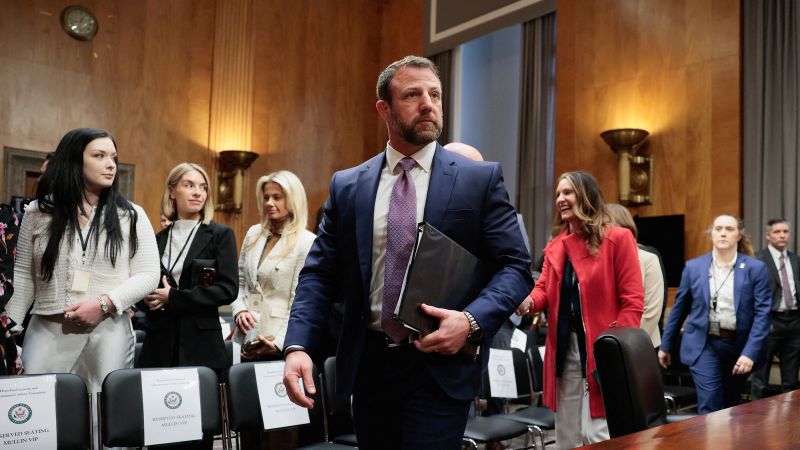
Mullin's Overseas Claims: Senate Hearing Scrutiny Awaits
Senator Markwayne Mullin, the former professional mixed martial arts fighter turned Oklahoma lawmaker, is once again at the center of a swirling controversy concerning his unverified overseas activities. As he prepares to face his colleagues in an upcoming Senate confirmation hearing, a persistent cloud of mystery looms over his past claims of extensive and dangerous security work in war zones. These privately alluded-to experiences, seemingly in a clandestine capacity for the U.S. government, stand in stark contrast to his public record and campaign narratives, raising questions about transparency, credibility, and the nature of public service.
The spotlight on Mullin's alleged secret service is intensifying. Despite having run five successful campaigns for the House and one for the Senate, there is no public record—nor any mention on his official websites—of the kind of security work he has suggested to former House colleagues and in private meetings. This discrepancy is precisely what makes the Markwayne Mullin's Secret War Zone Past: The Unanswered Questions so pertinent, and why his upcoming hearing promises to be a moment of significant scrutiny.
The Shadowy Allegations Behind the Senate Hearing
For a decade, Markwayne Mullin served in the U.S. House of Representatives, building a reputation as a no-nonsense former athlete who sold his family's plumbing business in 2021. Yet, beneath this public persona lies a narrative Mullin has selectively shared, hinting at a far more complex and perilous past. He has, on several occasions, suggested a history of significant security involvement in dangerous regions, specifically citing Afghanistan.
A Discrepancy Between Private Assertions and Public Profile
In private settings, Mullin, 48, has reportedly spoken of his time overseas "protecting our country." Former House colleagues describe him mentioning these experiences in passing, without boasting or offering extensive details. One lawmaker recalled Mullin speaking about his time overseas "without specifics," simply as a "matter-of-fact story." Importantly, these colleagues also affirmed Mullin's clarity that he was "not in the armed services," which further complicates the nature of the alleged work. They, however, believed he spent "extended periods overseas."
This privately shared narrative is strikingly absent from his extensive public profile. Mullin's biography highlights his career as a pro MMA fighter (with a 5-0 record), his entrepreneurial success, and his political trajectory. Nowhere is there a mention of security contracting, government work in war zones, or any related clandestine activities. This glaring omission from his public-facing image, particularly during multiple election cycles where such experiences might typically be highlighted, fuels the skepticism now facing him.
The Rationale for Secrecy: National Security or Personal Mystique?
When pressed by media outlets about his overseas activities, Mullin has adopted a stance of extreme caution and secrecy. "Brother, you know that I can't — I can't talk about any questions like this," he reportedly told Axios, deferring further inquiries to "the White House." He has cited the "sensitivity of the work" as the reason for his public silence regarding his alleged service in Afghanistan. This claim of sensitivity is a common justification for individuals involved in classified or covert operations, but without any verifiable public record, it also lends an air of mystique that can be difficult to challenge or confirm.
While the need for discretion in genuine national security work is undeniable, the complete absence of any public record, even a sanitized one, has raised eyebrows. This is particularly true when such claims, however vaguely presented, are made to colleagues and then cited as reason for political scrutiny. The question then becomes whether the secrecy is genuinely due to national security imperatives or if it serves to cultivate a particular image without the burden of substantiation.
Dissecting the Official Responses and Unraveling the Mullin War Zone Narrative
In response to the growing questions, Mullin's spokesperson offered a more nuanced and publicly palatable explanation, diverging significantly from the "dangerous security work" Mullin himself has privately alluded to. This official narrative provides a crucial counterpoint to the more secretive claims, demanding a careful examination of its components.
The Spokesperson's Account: CODELs and Christian Endeavors
A spokesperson for Senator Mullin did not directly address the private suggestions of war zone service. Instead, their statement highlighted several distinct types of overseas engagement. Firstly, they mentioned Mullin's participation in Congressional Delegations (CODELs) in his official capacity. CODELs are routine trips by members of Congress to represent the U.S. abroad, advance national security interests, and strengthen alliances. While important, these are generally official, publicly acknowledged visits, distinct from clandestine security operations.
Secondly, the spokesperson cited Mullin's pre-public service involvement in "mission work" and providing "individual mentorship support — from a Christian perspective — to U.S. troops as they transitioned home, as well as trusted allies who have helped support America's interests." This description paints a picture of humanitarian and faith-based outreach, often common among religious organizations and individuals supporting military personnel. While commendable, this type of support, especially to troops transitioning home, is fundamentally different from engaging in "dangerous security work" in an active war zone. Furthermore, the spokesperson noted Mullin's efforts to help American allies evacuate Afghanistan after the U.S. withdrawal in 2021, an incident where Mullin reportedly tried to fly into Afghanistan himself—an act he later downplayed, stating, "I'm not Rambo. I never pretended to be Rambo." These actions, while demonstrating initiative and concern, do not align with a long-standing pattern of secret security work.
Mullin's Hints: "Alongside" Military Contractors
Despite the spokesperson's more benign explanation, Mullin himself has offered fragments of a different story. In various interviews, he has hinted at working "alongside" individuals who had signed military contracts, referring to them as "phenomenal individuals." This phrasing suggests a proximity to, but not necessarily direct involvement in, military or security contracting roles. It allows for a broad interpretation: he could have been working alongside them in a support capacity (e.g., humanitarian, mentorship, or even journalistic), or in a more active security role. The ambiguity leaves room for speculation, but also avoids a direct, verifiable claim that would be easier to disprove without evidence. To truly understand the nuances of his claims, one might consider Decoding Markwayne Mullin's War Zone Stories: Truth or Tall Tale?
The juxtaposition of these narratives — Mullin's private allusions to clandestine security work, his spokesperson's account of CODELs and Christian missions, and Mullin's own vague hints about working "alongside" contractors — forms the core of the controversy. It presents a challenging puzzle for his Senate colleagues who must now scrutinize these claims.
Why Verification Matters: Trust, Security, and Public Service
For any public official, especially one involved in national security decisions, the veracity of their personal history is paramount. Unverified claims, particularly those related to sensitive military or security operations, can have significant implications for public trust and a senator's perceived credibility.
Credibility in High Office: The Imperative of Transparency
Senators regularly handle classified information, vote on defense spending, and engage in foreign policy debates. Their judgment and reliability are critical. When a senator alludes to a past involving clandestine activities in war zones, but provides no verifiable public record, it creates a vacuum that can be filled with speculation. For colleagues tasked with evaluating Mullin, this lack of transparency could be problematic. It's not about discrediting personal sacrifice; it's about ensuring that a public servant's narrative is consistent with what can be reasonably established, especially when that narrative hints at qualifications for roles of immense trust.
Practical Tip for Public Officials: In an age of instant information and intense scrutiny, politicians are well-advised to proactively address any aspects of their past that might become contentious. Transparency, even if generalized due to legitimate security concerns, often builds more trust than complete silence or vague allusions, which can inadvertently invite suspicion.
Navigating Unofficial Narratives: A Public Perspective
From a public perspective, evaluating such unofficial narratives requires a critical approach. Voters and citizens rely on factual information to assess their representatives. When a politician's past experiences are presented selectively or without substantiation, it challenges the fundamental principles of accountability. This situation underscores the importance of media scrutiny and the role of confirmation hearings as mechanisms for extracting information that might otherwise remain hidden.
Insight: The public's perception of a politician is often a blend of their policy stances, their public persona, and their personal story. When elements of that personal story, especially those that confer a sense of toughness or unique experience, are unverified, it can lead to questions about integrity and whether an individual is presenting an embellished version of themselves for political gain.
Anticipating the Senate Confirmation Hearing: Questions Await
The upcoming Senate confirmation hearing is the natural forum for these questions to be put directly to Senator Mullin. His colleagues, particularly those serving on relevant committees, will likely seek clarification on the nature of his overseas work.
Expectations for the Hearing:
- Direct Questions: Senators, particularly those from the opposing party or those concerned about national security precedent, are expected to directly ask Mullin about his alleged "mullin war zone" activities.
- Demand for Specifics: While acknowledging legitimate security concerns, there will likely be a push for more details than previously offered. The line between protecting classified information and simply avoiding scrutiny will be a fine one to walk.
- Consistency with Public Record: Committee members will likely highlight the stark contrast between his private claims and his publicly available biography and campaign messaging.
- Impact on Credibility: The hearing may delve into how these unverified claims impact his credibility, particularly for roles requiring high levels of trust and access to sensitive information.
The pressure on Mullin will be immense. His responses, or lack thereof, will not only shape perceptions of his character but could also influence the outcome of the confirmation process and his future standing in the Senate.
Conclusion
Senator Markwayne Mullin's privately shared claims of extensive and dangerous security work in war zones, particularly in Afghanistan, have created a significant point of contention as his Senate confirmation hearing approaches. The lack of public record, coupled with conflicting narratives from Mullin himself and his spokesperson, demands thorough scrutiny. While the need for discretion in genuine national security matters is understood, the imperative for transparency and verifiable claims for public officials remains paramount. The upcoming hearing will provide a critical opportunity for Mullin to address these questions directly, and for his colleagues to weigh the implications of his past on his fitness for continued public service. Ultimately, the resolution of this mystery will not only impact Senator Mullin but will also serve as a broader commentary on the standards of honesty and accountability expected from those who serve in the highest offices.